Finley Schulz · 25 September 2026
Balancing User Experience and Regulatory Compliance in Emerging Digital Tools
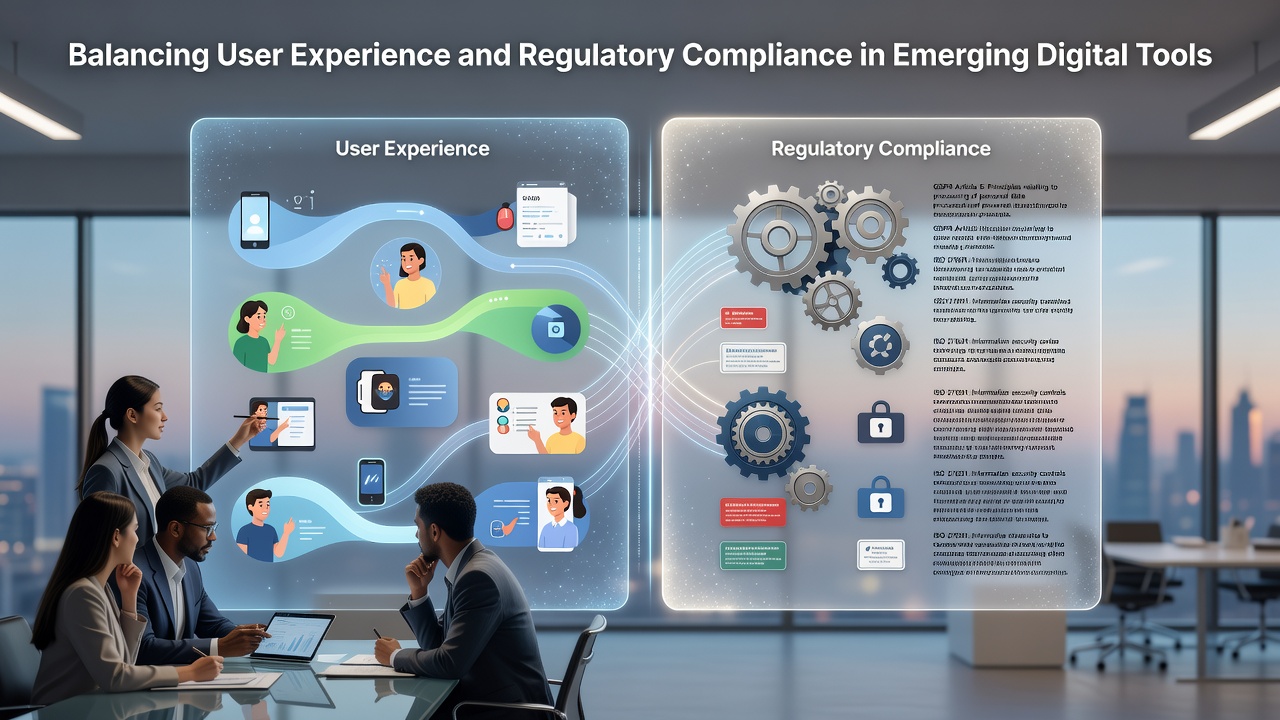
Emerging digital tools such as AI-driven platforms, connected health devices, and decentralized finance applications require developers to integrate regulatory requirements directly into interface design from the outset, and this integration shapes how users interact with features like data sharing and automated decision-making. Regulatory frameworks across regions mandate transparency in algorithmic processes while demanding that systems protect personal information without introducing friction that disrupts daily workflows, yet the technical standards continue to evolve rapidly as new tools enter the market.
Current Regulatory Environment for Digital Innovation
Government agencies in multiple jurisdictions have updated their oversight mechanisms to address the rapid deployment of artificial intelligence and data-intensive applications, and the European Union's AI Act sets tiered obligations based on risk levels that took full effect for high-risk systems by early 2026. In the United States the Federal Trade Commission continues to enforce rules on unfair or deceptive practices in digital services through ongoing guidance documents that clarify expectations for consent mechanisms and algorithmic accountability. Observers note that these parallel developments create overlapping requirements for companies operating across borders, while compliance teams must map each rule to specific user interface elements such as notification banners and permission flows.
Research from academic institutions indicates that organizations allocating resources to compliance mapping early in product development encounter fewer redesign cycles later, and data from industry reports show average implementation timelines stretching between nine and eighteen months depending on tool complexity. As of September 2026 additional reporting thresholds for automated decision systems came into force in several jurisdictions, prompting teams to embed audit logs directly into backend architectures that remain invisible to end users yet support regulatory audits on demand.
Design Tensions Between Compliance and Seamless Interaction
Teams building digital tools frequently encounter situations where mandatory disclosures compete for screen space with core functionality, and this competition forces designers to prioritize information hierarchy without overwhelming users during onboarding sequences. Consent interfaces must present options in plain language while satisfying legal specificity requirements, yet lengthy text blocks often lead to higher abandonment rates according to usability studies conducted by independent research labs. Developers therefore experiment with progressive disclosure techniques that reveal details only when users expand sections, maintaining visual clarity while meeting disclosure mandates.
Security protocols such as multi-factor authentication add verification steps that protect against unauthorized access, and these measures align with regulatory expectations for safeguarding sensitive data in emerging health and finance applications. At the same time, excessive authentication prompts can interrupt task completion, leading product teams to adopt contextual triggers that activate only when risk signals appear rather than applying uniform requirements to every session. Studies conducted by university research groups have quantified how these adaptive approaches preserve completion rates while satisfying audit criteria from oversight bodies.

Implementation Approaches Observed Across Sectors
Organizations developing connected medical devices have integrated regulatory compliance into user experience through modular consent modules that adapt based on jurisdiction and device type, and these modules pull from centralized rule engines that update automatically when standards change. Similar patterns appear in decentralized finance platforms where transaction interfaces embed real-time compliance checks that flag unusual activity without halting legitimate flows, allowing users to review and confirm details before final submission. Industry associations tracking these implementations report that such embedded controls reduce post-launch remediation costs by measurable percentages across comparable deployments.
Training programs for design and engineering staff now routinely include modules on regulatory mapping, and cross-functional workshops help teams translate legal text into interface patterns that satisfy both user needs and auditor expectations. External audits conducted by third-party firms provide additional validation that interfaces meet stated requirements, and the resulting documentation supports ongoing maintenance as regulations continue to shift. Data collected through these audits reveals consistent correlations between early compliance involvement and smoother certification processes in multiple markets.
Measurement and Iteration Practices
Product teams track compliance-related metrics alongside traditional user experience indicators such as task completion time and error rates, and dashboards often display both sets of data in unified views that highlight potential conflicts. When regulatory updates require interface modifications, teams run A/B tests that compare new disclosure formats against previous versions while monitoring both usability scores and audit readiness indicators. These combined measurement approaches allow organizations to quantify trade-offs and prioritize adjustments that maintain performance across both dimensions.
Conclusion
Balancing user experience and regulatory compliance in emerging digital tools involves continuous coordination between technical, legal, and design functions throughout the development lifecycle. Organizations that embed compliance considerations into initial wireframes and maintain adaptable systems demonstrate greater capacity to respond to new requirements without compromising interaction quality. As regulatory landscapes expand through 2026 and beyond, the integration of these two priorities remains a central operational focus for teams delivering digital tools across global markets.