Finley Schulz · 9 October 2026
Adaptive Frameworks for Audience Retention in Standalone Digital Ventures Through Specialized Platform Tools
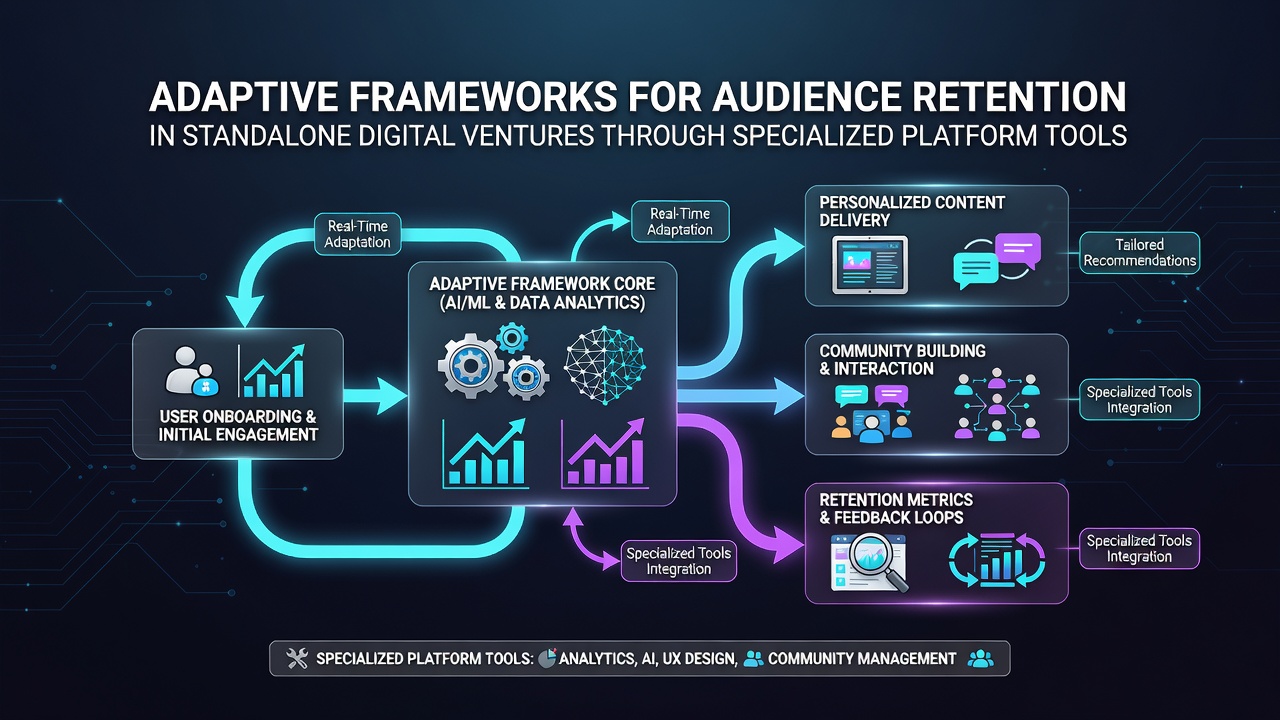
Standalone digital ventures rely on adaptive frameworks to maintain audience engagement across independent websites and applications, where specialized platform tools collect behavioral data, adjust content delivery in real time, and refine user pathways based on interaction patterns. These frameworks integrate analytics engines with personalization modules that respond to session duration, navigation sequences, and content consumption rates, allowing operators to sustain traffic quality without dependence on external advertising networks.
Core Components of Adaptive Frameworks
Researchers at institutions tracking digital media consumption note that adaptive frameworks combine modular data pipelines with decision trees that evaluate user signals at multiple touchpoints. Data from session logs feeds into algorithms that segment audiences by engagement depth, then trigger tailored responses such as dynamic article recommendations or interface adjustments. Observers note that this process operates continuously, with updates applied within seconds of new input rather than through scheduled batch processing.
Platform tools supporting these frameworks include customer data platforms that unify first-party metrics, A/B testing suites that measure retention lift across variants, and notification systems that time outreach according to historical activity peaks. European Commission reports on digital single market performance indicate that ventures deploying such integrated stacks recorded measurable improvements in return visit frequency during periods when algorithmic adjustments occurred daily.
Platform Tool Integration in Practice
Independent operators connect these tools through APIs that allow seamless data exchange between analytics dashboards and content management systems. When a user completes a specific action sequence, the framework evaluates predefined retention thresholds and activates corresponding interventions, such as surfacing related resources or adjusting layout density. Studies from academic groups examining small-scale digital projects show that ventures maintaining consistent integration between these components experience steadier audience curves compared with those relying on static configurations.

What's interesting is how certain tools incorporate predictive scoring that estimates future engagement probability based on early session behavior. Operators who calibrate these scores against actual return data refine their models over successive weeks, producing increasingly accurate retention forecasts. Figures from industry analyses released in 2025 demonstrate that ventures applying iterative calibration achieved higher sustained user bases by October 2026, particularly when frameworks incorporated cross-device tracking capabilities.
Data Patterns and Retention Metrics
Retention metrics tracked within these frameworks encompass repeat visit intervals, content completion rates, and interaction depth scores. According to findings compiled by the Pew Research Center, digital properties employing adaptive segmentation observed average increases in monthly active users when personalization extended beyond basic demographics to include behavioral clusters. Those clusters form through unsupervised learning routines that identify patterns invisible to manual review.
Specialized tools also generate alerts when retention indicators dip below established baselines, prompting operators to investigate content freshness or navigation friction. This monitoring loop operates alongside broader market data feeds, allowing ventures to compare internal trends against sector benchmarks published by organizations such as teh Interactive Advertising Bureau. The resulting adjustments often involve minor interface tweaks that accumulate into measurable retention gains over quarterly cycles.
Implementation Considerations for Independent Operators
Deployment begins with mapping existing data sources into a unified schema that the adaptive framework can query without latency issues. Once connected, testing phases validate each automation rule against historical records before live activation. Ventures that document these validation steps report fewer unintended drops in engagement after rollout. Regulatory guidance from bodies such as the Office of the Australian Information Commissioner emphasizes transparent data handling within these systems, requiring clear consent mechanisms that frameworks must respect during personalization.
Training for operators focuses on interpreting dashboard outputs rather than coding new rules, since many platforms now offer no-code interfaces for threshold setting and response definition. This accessibility expands framework adoption among smaller teams that previously lacked technical resources for custom development.
Conclusion
Adaptive frameworks paired with specialized platform tools provide standalone digital ventures with structured methods for sustaining audience relationships through continuous data-driven adjustments. Evidence from multiple research sources confirms that systematic integration of analytics, personalization, and monitoring components correlates with improved retention indicators across independent sites and applications. As platform capabilities evolve, the emphasis remains on accurate data mapping and iterative refinement to maintain performance consistency.